Dollar for Research provides grower members with locally applicable, data-driven answers to crop production challenges through research.
The Purpose
As public funding of applied agricultural research has declined in recent years, IMPACT initiated the Dollar for Research Program. This program was started in 2017 with the goal to help solve local production challenges and improve profitability and sustainability. Funded and directed by local growers, this research program is grower-focused, locally applicable and data-driven.
The Plan
- Survey the grower group members to identify the needs and goals of the group.
- Establish the primary research goals for the coming season based on the surveys.
- Create protocols for trials to address the grower group goals for research.
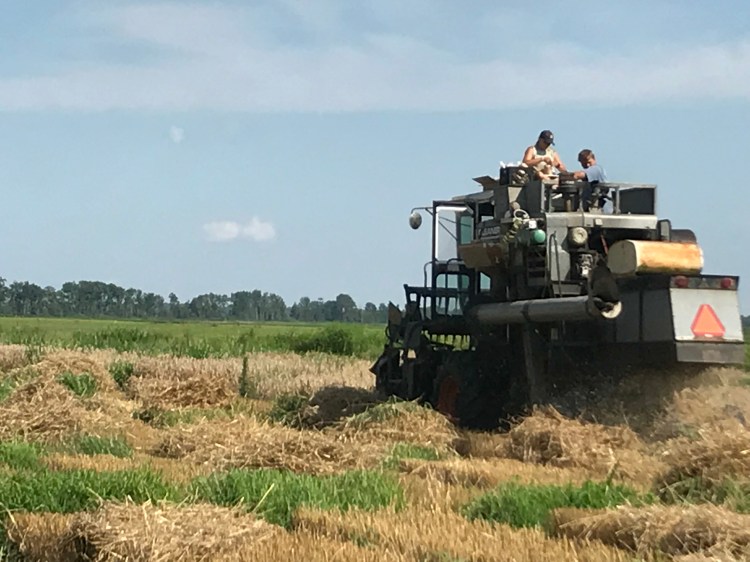
- Conduct trials on our research farm in Pantego and on-farm with grower members as needed.
- Analyze the data and produce a written booklet with results.
- Have an educational meeting at our office to review results and discuss plans for the coming season.
The Fee – $1.00/A
Growers are charged $1.00 per acre that they farm. We also offer discounts for long-term members and large acre growers.
We pool this money and use it to conduct research to address needs based on the pre-season survey of grower members.
Types of Research
Research is conducted as replicated small plot trials, on-farm trials, demonstration plots, or other types of studies as needed. Over the first several years, we have conducted variety trials, herbicide trials, fertility trials, insecticide trials and growth regulator trials. We have also conducted a large sampling project to better understand the situation on farms with saltwater intrusion problems.
Each year we gain knowledge and use it to continue to build. We have initiated a long-term large-scale cover crop trial to help understand the effects on the soil, fertility and yield. We are taking what we have learned in the salt sampling studies to create new protocols to test in the future to help bring some relief and restoration to high sodium soils. We continue to build on our corn, soybean and cotton fertility studies to continue to improve our understanding of how to use fertilizers profitably.
All of our research is conducted locally within the Blacklands region of North Carolina. In our studies we try to help identify the best practices for soil types in our region ranging from mineral soils to high organic muck soils.

 IMPACT Agronomics